
India has closed its airspace to flights operated by Pakistani airlines in a retaliatory move following the Pahalgam terror attack. The ban will be in effect until May 23 and applies to all aircraft registered in Pakistan, as well as planes operated, owned or leased by Pakistani airlines and operators. This comes a week after Pakistan closed its airspace to Indian carriers. The move is part of various measures taken by the Indian government against Pakistan in the wake of the Pahalgam terror attack that killed 26 people.

India-Canada ties saw tensions after Prime Minister Justin Trudeau in September 2023 in the House of Commons said there were "credible allegations" of a potential link between Indian agents and the killing of pro-Khalistan separatist leader Hardeep Singh Nijjar in Surrey, British Columbia.

The statement came hours after Prime Minister Narendra Modi on Tuesday told the top defence brass that the armed forces have "complete operational freedom" to decide on the mode, targets and timing of India's response to the Pahalgam terror attack, government sources said.
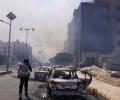
The ceasefire follows Israeli airstrikes on Syria on Wednesday, which Israel said were carried out to protect the Druze, a minority Arab religious group.

Implementation of sports bill in 6 months, regulation of participation standard safeguard: Mandaviya
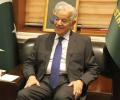
Last week, Information Minister Atta Tarar had said that 24-36 hours were important, fearing a possible strike by India. However, the time passed and there was no action by India.
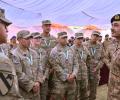
'Trump's sons, and the son of Trump's Mideast envoy Steven Witkoff, are in the crypto business and recently signed deals with Pakistan's crypto council.' 'It may not be coincidental that not long before the Trump-Munir meeting, the head of Pakistan's crypto council met with Trump's White House crypto policy czar.'

Pakistan has banned Indian-flagged ships from entering its ports with immediate effect after India imposed fresh punitive measures, including a ban on the import of goods and entry of Pakistani vessels into its ports, against Islamabad amid heightened tensions following the Pahalgam terror attack. The move comes after India announced a raft of punitive measures against Pakistan, including the suspension of the Indus Waters Treaty, shutting down of the only operational land border crossing at Attari, and downgrading of diplomatic ties following the terror attack. The Pakistan Army has also conducted a successful training launch of the Abdali Weapon System, a surface-to-surface missile with a range of 450 km, saying it was aimed at ensuring the operational readiness of troops and validating key technical parameters. India considers the test launch of the ballistic missile a "blatant" act of "provocation."

The MSC Aries was last seen on Friday, sailing towards the Strait of Hormuz off the coast of Dubai, according to The Times of Israel.

While India are on a high after a measured six-wicket win over a sprightly Bangladesh, Pakistan are evidently tense after the 60-run loss in the tournament-opener to New Zealand.
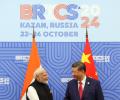
'Don't play the American game... India is too big for a US game.'

Vice President J D Vance has said that the United States hopes that India will respond to the Pahalgam terrorist attack in a way that does not lead to a 'broader regional conflict' and expects Pakistan to 'cooperate' with New Delhi to 'hunt down' militants sometimes operating from their soil.

Pakistan on Tuesday held a detailed briefing for Islamabad-based foreign diplomats on the tension along the border with India, as part of efforts to highlight the Kashmir issue at the international level.

Amid escalating tensions between India and Pakistan, the US has said it will not get involved in the conflict, stressing that it is "fundamentally none of our business." While acknowledging concerns about a potential nuclear war, Vice President J D Vance emphasized that the US cannot control India and Pakistan, but can encourage them to de-escalate. The US has also reiterated its support for direct dialogue between the two countries and encouraged efforts to improve communications.

'When it comes to India, I have mentioned it many times, I am in close contact with my counterpart, S Jaishankar, and we know this is a difficult moment in a relationship that spanned decades, so therefore I am confident that we will be able to get through this difficult period'

In the short run, the Trump presidency has already ensured one thing: The assumptions of the past can no longer guide the strategies of the future, points out Manish Dabhade.

Main imports from the neighbouring country during April-January 2024-25 included fruits and nuts (USD 0.08 million), certain oil seeds and medicinal plants (USD 0.26 million), and organic chemicals.

Bhutto, who served as the Foreign Minister earlier, addressed a briefing at the UN Headquarters in New York and sought reconciliation with India, making a plea for talks and Intel sharing between the two neighbours.

Terrorism is a global menace to be addressed by humanity in unison was the all-party delegation's message to Algeria as it concluded its visit to the North African country on Sunday.

Lee Jae-myung's decisive victory in South Korea's snap presidential election marks a major political shift driven by public backlash against authoritarian, with significant implications for domestic reform and the future of the US-South Korea alliance, observes Dr Rajaram Panda.
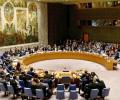
The United Nations Security Council held closed-door consultations on rising tensions between India and Pakistan, with envoys calling for restraint and dialogue. The consultations, requested by Pakistan, lasted for about an hour and a half. UN Secretary-General Antonio Guterres expressed concern over the tensions, urging both countries to avoid a military confrontation. India's former Permanent Representative to the UN, Syed Akbaruddin, said that no consequential outcome could be expected from the discussion.
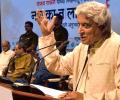
Akhtar criticised vested interest groups in Pakistan, particularly the army, the political establishment and the extreme right wing, for blocking peace efforts between the two nations.
The ministry of external affairs said in a statement that the Indian embassy remains in touch with the community with a view to extend all feasible assistance.
Asked about the expectations from the US, Azar said Washington and Israel are "completely in sync". He said he felt that the US would "support" Israel's action.

India has suspended the Indus Waters Treaty with Pakistan, citing sustained cross-border terrorism and security concerns. The treaty, brokered by the World Bank in 1960, governs the distribution and use of the Indus river and its tributaries between the two countries. India's decision follows a recent terror attack in Jammu and Kashmir, and has been met with strong condemnation from Pakistan.

Top Canadian officials have accused Union Home Minister Amit Shah of leading a campaign targeting Sikh separatists in Canada, escalating tensions between the two nations.

In the letter issued, considering the last night attacks by Pakistani forces in Jammu and Jaisalmer regions, the provision also authorises the use of local authority funds for such emergency measures, giving them precedence over other financial obligations.

India is at war with terrorists and will bring justice to victims of the Pahalgam attack by holding the perpetrators accountable, Indian Ambassador to the US Vinay Kwatra has said. He underscored that India launched 'Operation Sindoor' on May 7, striking terror factories at nine locations in Pakistan and Pakistan-occupied Kashmir in retaliation for the Pahalgam terror attack that killed 26 civilians. Kwatra also criticized Pakistan for its continued support of terrorism and said that the world should be concerned about this.

The Canadian high commissioner to India was summoned to the ministry of external affairs and informed about the decision to expel the senior Canadian diplomat.
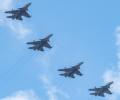
Pakistani military targets at Rafiqui, Murid, Chaklala, Rahim Yar Khan, Sukkur and Chunian were engaged using air-launched precision weapons from Indian fighter jets and the retaliation largely focused on command and control centres, radar sites and weapon storage areas, Qureshi said.

While Canada denies harbouring extremists or terrorists, Kugelman pointed out that India remains firm in its disagreement.
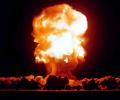
Beijing's latest weapon, 15 times more powerful than TNT, signals a new frontier in high-impact, non-nuclear military technology.
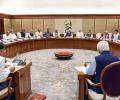
India has reached out to key global powers, including members of the UN Security Council, and apprised them about the reasons behind its military strikes on nine terror targets in Pakistan and Pakistan-occupied-Kashmir in retaliation for the Pahalgam terror attack. New Delhi also conveyed to the countries that it will retaliate if Islamabad escalates the already tense situation.
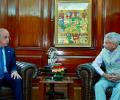
As tensions escalated between India and Pakistan following the deadly Pahalgam terror attack, Iran reached out to both countries, urging de-escalation. Saudi Arabia also expressed concern, with its foreign minister engaging in phone conversations with his Indian and Pakistani counterparts. Iran's foreign minister, Seyed Abbas Araghchi, emphasized the importance of bilateral relations, stating Tehran's willingness to "forge greater understanding" at this critical time. Saudi Arabia's foreign minister, Faisal bin Farhan Al Saud, spoke with both India's External Affairs Minister S Jaishankar and Pakistan's Foreign Minister Mohammad Ishaq Dar. Amidst heightened tensions, India has taken a series of punitive measures against Pakistan, including suspending the Indus Waters Treaty and downgrading diplomatic ties. Pakistan responded by shutting its airspace to Indian airliners and suspending all trade. Both countries exchanged warnings, with Pakistan emphasizing its commitment to "respond firmly to any aggression."

The father of a BSF jawan detained by Pakistan Rangers after inadvertently crossing the international border in Punjab has said that the family is anxiously waiting for his return. The jawan, P K Sahu, was taken into custody on Wednesday after he reportedly walked ahead to rest under a tree and inadvertently crossed over into Pakistan territory. The commanding officer of the jawan's battalion has said a flag meeting is being held to secure his release.
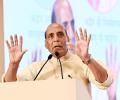
Defence Minister Rajnath Singh on Sunday said it is his responsibility to work with the armed forces and give a "befitting reply" to those who cast an evil eye on India, his remarks coming in the backdrop of the recent Pahalgam terror attack. Singh's assertion came as India is mulling retaliatory measures against Pakistan in view of the cross-border linkages to the April 22 Pahalgam terror attack that has killed 26 people, mostly tourists. He said, "As the defence minister, it is my responsibility to work with my soldiers and ensure the protection of the country's borders. And it is my responsibility to give a befitting reply, by working with the armed forces, to those who cast an evil eye on our country."
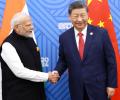
Chinese President Xi Jinping on Wednesday pledged to strengthen the strategic relationships with neighbouring countries by 'appropriately' managing differences and enhancing supply chain ties as China's tariff war with the United States escalated.

An 18-year-old Nepalese student of the Kalinga Institute of Industrial Technology (KIIT) in Odisha's Bhubaneswar was found hanging from the ceiling fan of her hostel room on Thursday, police said.
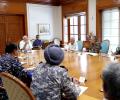
'One good outcome of Operation Sindoor -- perhaps, its best outcome -- could be that India has resumed meaningful contact directly with Pakistan at the military-to-military level,' observes Ambassador M K Bhadrakumar.
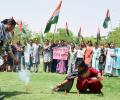
Opposition parties in India, including the Congress, Left parties, Samajwadi Party, Bahujan Samaj Party, Trinamool Congress, Dravida Munnetra Kazhagam, Rashtriya Janata Dal, Shiv Sena (UBT), and NCP (SP), have unanimously hailed the armed forces' "Operation Sindoor", a retaliatory strike against terrorist infrastructure in Pakistan and Pakistan-occupied Kashmir (PoK). The operation, which involved missile and drone strikes, was conducted in response to the April 22 Pahalgam terror attack. Despite political differences, all parties expressed support for the government and the armed forces, stressing the importance of national unity and integrity in the face of terrorism. While emphasizing the need for diplomatic avenues to prevent further escalation, some parties also called for caution in attributing political credit for the strikes.
